Posts

Showing posts with the label Acid Base

Bronsted-Lowry Concept of Acids and Bases
Image
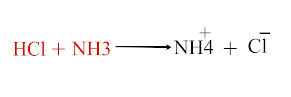
 The Danish chemist J. N. Bronsted and an English chemist T. M. Lowry independently expanded the Arrhenius acid and base definitions. According to this concept, A Bronsted-Lowry acid is a substance (molecule or ion) that is a proton (H+) donor, whereas a Bronsted-Lowry base is a substance (molecule or ion) that is a proton (H+) acceptor.  For Example               Hydrochloric acid acts as a Bronsted-Lowry acid when it reacts with ammonia. In this example, (HCl) donates a proton and acts as an acid, while ammonia (NH3) accepts a proton to form an ammonium ion (NH4+) and serves as a base.  Water can also act as a Bronsted-Lowry acid.  For example,  The following reaction, in which the H2O molecule gives a proton to the NH3.  In another example, water acts as a Bronsted-Lowry base as it accepts a proton from HCI, which act as an acid.  Therefore, the water (H20) molecule acts both as an acid well as a base (amphote...

Limitations of Arrhenius Concept

 The limitations of Arrhenius concept are Arrhenius concept is only limited to aqueous medium and dose not explain the acidity and basicity of the substance in non equeous medium  In Arrhenius concept acids are limited to hydrogen ion (H+) only and bases are limited to hydroxide ion (OH-). It cannot explain the acidic nature of carbon dioxide (CO2) and basic nature of ammonia (NH3) 

Simple Definition of Arrhenius Acid and Base

  Simple Definition of Arrhenius Acid and Base Arrhenius Acids An acid is a chemical substance that dissociates in an aqueous solution to give hydrogen ions (H+) A substance such as HCl, H2SO4, HNO3, CH3COOH, HCN, etc, is acids because they ionize in an aqueous solution to produce H+ ions. Arrhenius Base Arrhenius base is a chemical substance that dissociates in an aqueous solution to give hydroxide ions (OH -) The substances such as NaOH, KOH, NH4OH, Mg(OH)2, etc are bases because they ionize in aqueous solutions to provide OH- ions